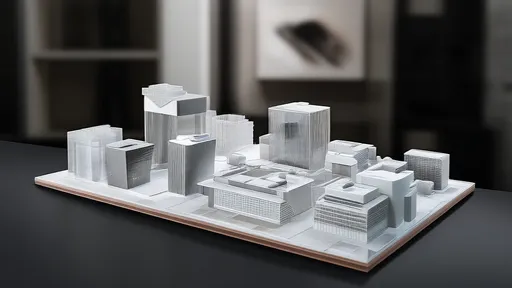
In the hushed galleries where scale becomes an illusion and detail commands reverence, architectural model making transcends its traditional role as a mere representation of a future structure. It has blossomed into a profound artistic discipline, a medium where concepts are not just shown but felt, where space is not just measured but experienced. This is the world of architectural model art—a realm where miniature worlds breathe life into big ideas.
The journey of an architectural model from utilitarian tool to expressive art form is a fascinating evolution. Historically, these models served pragmatic purposes: to convince a patron, to test structural logic, or to provide a builder with a three-dimensional guide. They were, in essence, a means to an end. Yet, somewhere along the way, the hands that carved the balsa wood and applied the acrylic paint began to invest more than just technical skill. They began to imbue these microcosms with narrative, emotion, and a point of view. The model ceased to be a simple facsimile and became a translation—an interpretation of an architectural idea filtered through the artist's unique sensibility.
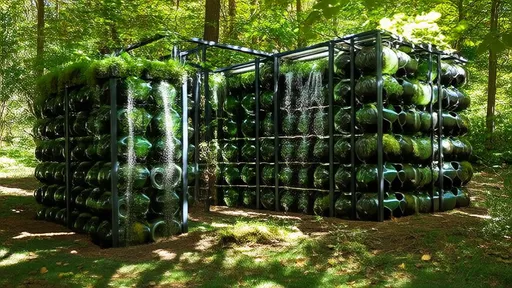
This artistic shift is powerfully evident in the materials and methods employed by contemporary model artists. No longer confined to traditional basswood and foam core, the modern practitioner is an alchemist of the mundane. Found objects, repurposed industrial materials, translucent resins, and even digital components are fused together. The choice of material is never arbitrary; it is a deliberate part of the conceptual statement. A model exploring the memory of a site might incorporate earth and fragments salvaged from it. A concept about impermanence might be rendered in ice or biodegradable compounds, destined to change and decay over the course of an exhibition. The texture, the weight, the very substance of the model carries meaning, adding a tactile, visceral layer to the intellectual exercise of architecture.
Perhaps the most captivating aspect of this art form is its unique manipulation of scale and perception. By shrinking the vast to the handheld, the model artist creates an intimate dialogue between the viewer and the concept. We are granted god-like dominion over a city block, able to comprehend its entirety in a single glance. This shift in perspective is not just physical but psychological. It allows us to engage with complex urban planning theories or philosophical ideas about shelter and community in a direct, almost primal way. The miniature demands close inspection; it draws the viewer in, forcing a focus on details that would be lost in a full-scale building. In this intimate space, a single, perfectly placed figurine can tell a story of human habitation more effectively than a thousand-word description.
Light plays a role in these miniature worlds that can only be described as cinematic. Artists meticulously choreograph light and shadow to evoke mood, highlight form, and suggest the passage of time within their static creations. A carefully placed pinpoint light can simulate the noon sun, casting sharp, defining shadows that articulate the depth of a facade. Diffused, ambient light might suggest the melancholy haze of dawn, softening edges and blurring forms to create a dreamlike atmosphere. Some models incorporate internal lighting, causing translucent materials to glow from within, suggesting life, energy, or perhaps the soul of the structure itself. This mastery of illumination transforms the model from an object to be observed into an environment to be felt.
The narrative capacity of these conceptual models is where they truly separate themselves from their technical counterparts. They are not answers, but questions. They are physical manifestations of "what if?" What if a building could grow like a crystal? What if our homes could reflect the fragmented nature of digital memory? What if we built with time, and not against it? These models tell stories of place, of history, of future possibilities, and of ecological relationships. They can be critical commentaries on consumerism, poignant meditations on loss, or optimistic proposals for new ways of living. The story is not appended to the model; it is baked into its very core, evident in every cut, every joint, and every chosen material.
In today's digital age, where photorealistic renderings and virtual reality walkthroughs are ubiquitous, the persistence and growing prestige of the physical model might seem paradoxical. Yet, it is precisely this tangibility that secures its relevance. In a world increasingly experienced through screens, the physical, tactile presence of a well-crafted model offers an authentic and resonant encounter that pixels cannot replicate. It is an object of authenticity in a virtual sea. It acknowledges the human hand, the slight imperfection, the grain of the material—things that connect us to the act of creation on a deeply human level.
Looking forward, the boundaries of architectural model art continue to expand. The fusion of digital fabrication techniques like 3D printing and laser cutting with hand-finishing allows for an unprecedented level of detail and complexity. We are beginning to see hybrid models that incorporate interactive elements, responding to viewers' presence or changing based on data inputs. Yet, despite these technological advances, the heart of the practice remains the same: the potent act of giving physical form to an abstract idea. It is a testament to our enduring desire to make ideas tangible, to hold a thought in our hands, and to see the world not only as it is, but as it could be.
Ultimately, the art of the architectural model is a language of its own. It speaks of space, form, and light, but also of memory, aspiration, and critique. It reminds us that architecture is not merely about enclosure and function, but about experience and emotion. These miniature worlds, in their meticulous detail and profound conceptual depth, challenge us to look closer, think deeper, and imagine broader. They are not small things; they are vast ideas, concentrated.

By /Aug 28, 2025
By /Aug 28, 2025

By /Aug 28, 2025
By /Aug 28, 2025

By /Aug 28, 2025

By /Aug 28, 2025
By /Aug 28, 2025
By /Aug 28, 2025
By /Aug 28, 2025
By /Aug 28, 2025
By /Aug 28, 2025
By /Aug 28, 2025

By /Aug 28, 2025
By /Aug 28, 2025

By /Aug 28, 2025
By /Aug 28, 2025

By /Aug 28, 2025
By /Aug 28, 2025
By /Aug 28, 2025

By /Aug 28, 2025
